
Art is a beautiful form of expression that has been around for centuries. From paintings to sculptures, artists use various techniques to create stunning pieces that captivate audiences. One essential aspect of art is patterns, which play a significant role in creating visually appealing works.
Patterns are repetitive designs or motifs that are used in art to create a sense of harmony, rhythm, and unity. They can be found in various art forms, such as painting, textiles, and architecture. Patterns add interest and complexity to a piece, drawing the viewer’s eye and creating a cohesive composition.
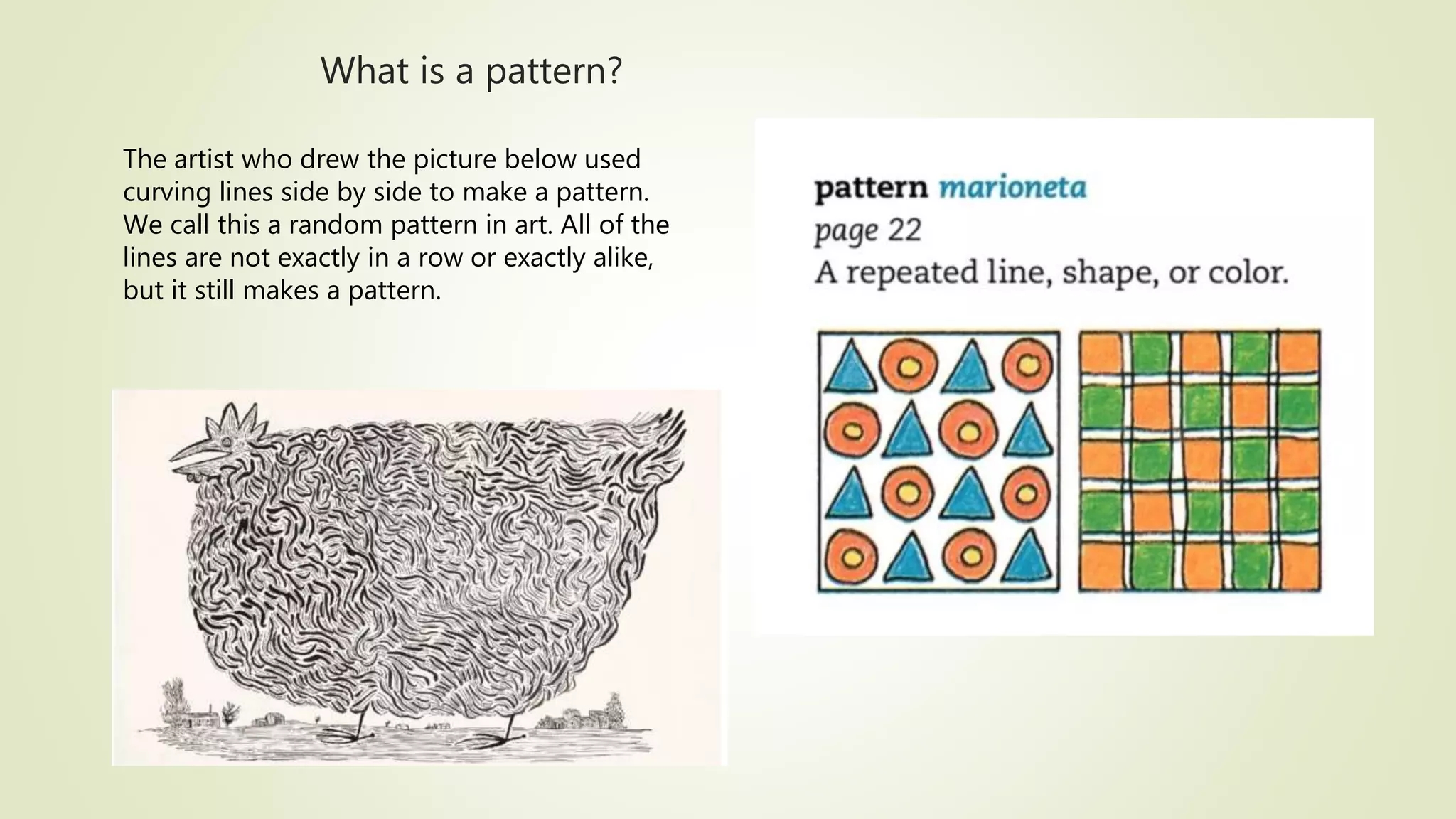
pattern definition in art
Pattern Definition in Art
In art, a pattern is a repeating motif or design element that creates a sense of order and structure within a piece. Patterns can be simple or intricate, geometric or organic, and can be used to convey a wide range of emotions and meanings.
Patterns can be found in nature, such as the intricate designs of a snowflake or the repetitive shapes of a seashell. Artists often draw inspiration from nature when creating patterns in their work, using the beauty and symmetry found in the natural world to inform their designs.
Whether it’s a bold geometric pattern in a modern painting or a delicate floral motif in a traditional tapestry, patterns play a crucial role in art. They add visual interest, create a sense of movement, and help to unify a piece, making it a cohesive and harmonious whole.
In conclusion, patterns are an essential element of art that enhances the beauty and meaning of a piece. By incorporating patterns into their work, artists can create visually stunning pieces that captivate and inspire viewers, making patterns a fundamental aspect of artistic expression.
Principle Of Art Pattern PPTX
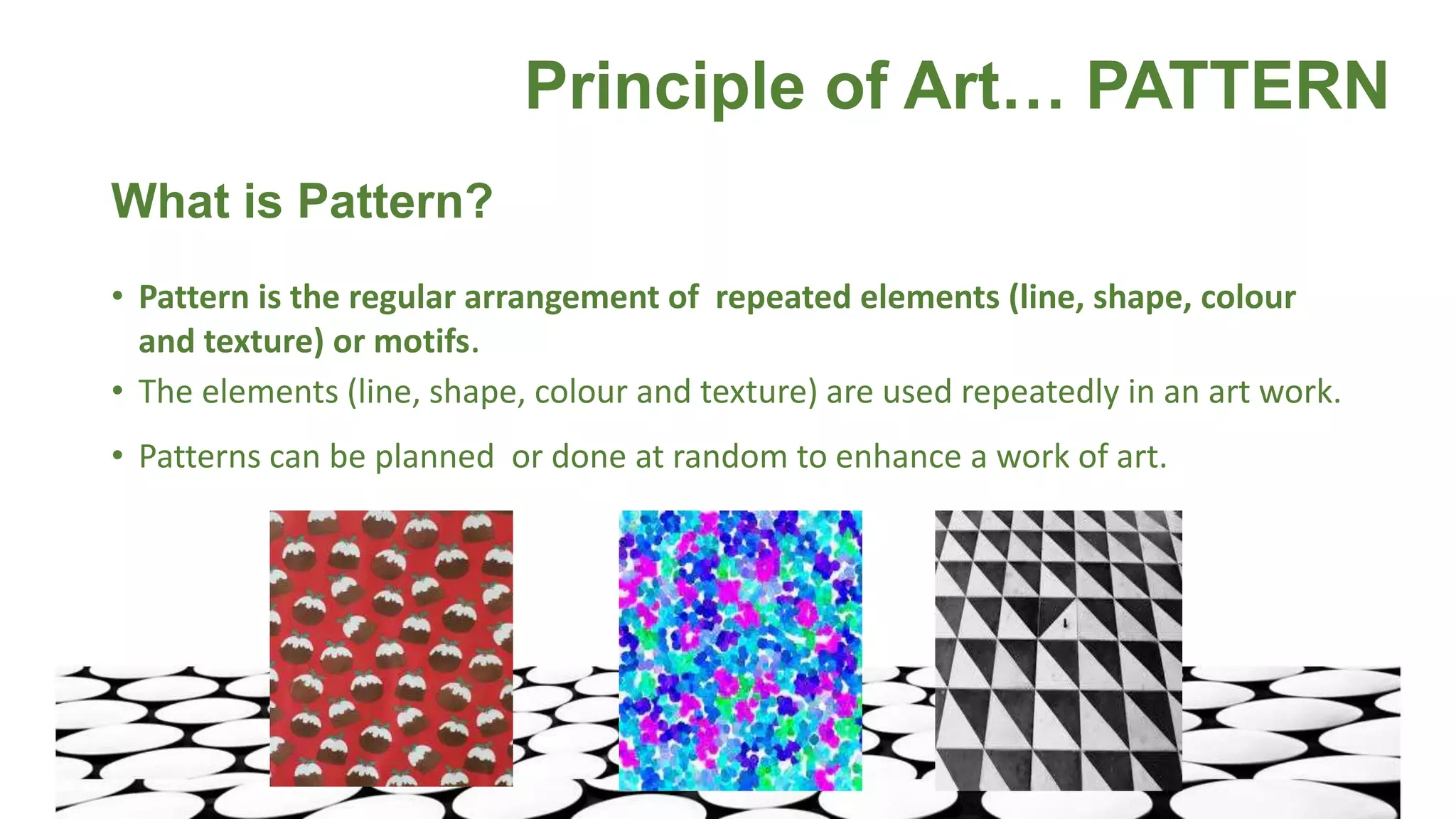
Principle Of Art Pattern PPTX

What Is Pattern Principle In Art 4 Types Examples Definition YourArtPath
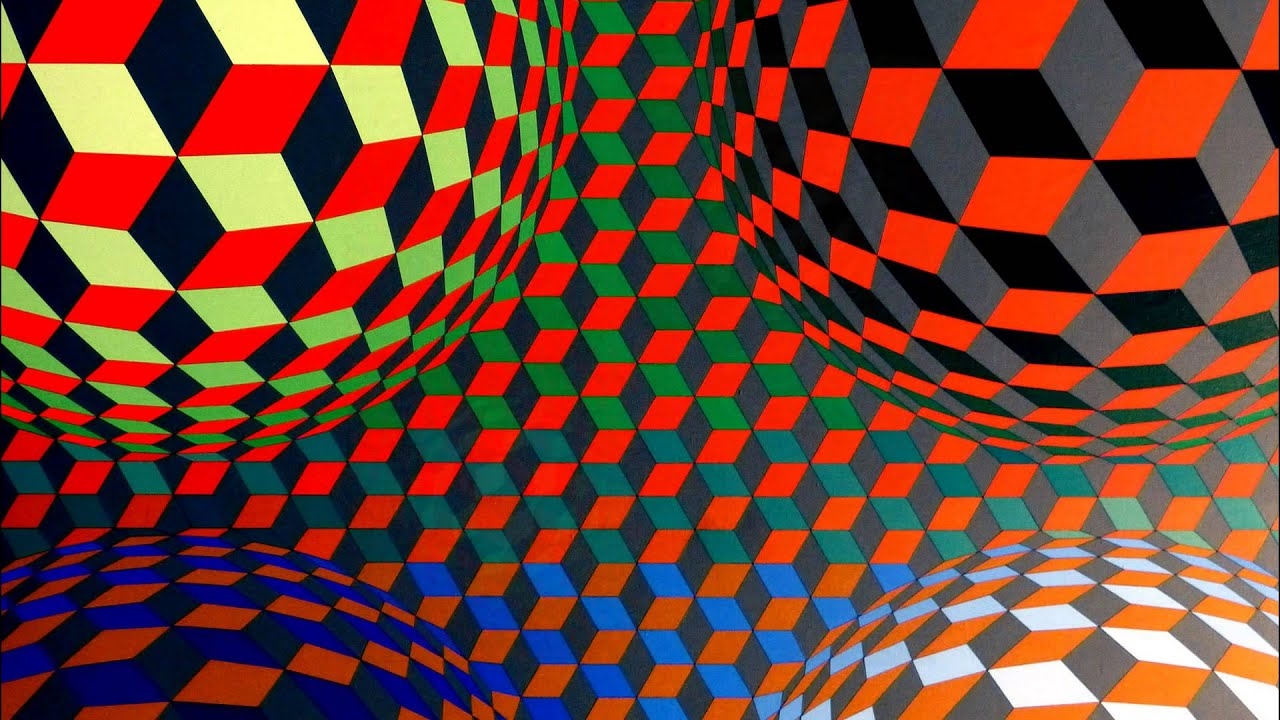
What Is Pattern Principle In Art 4 Types Examples Definition YourArtPath
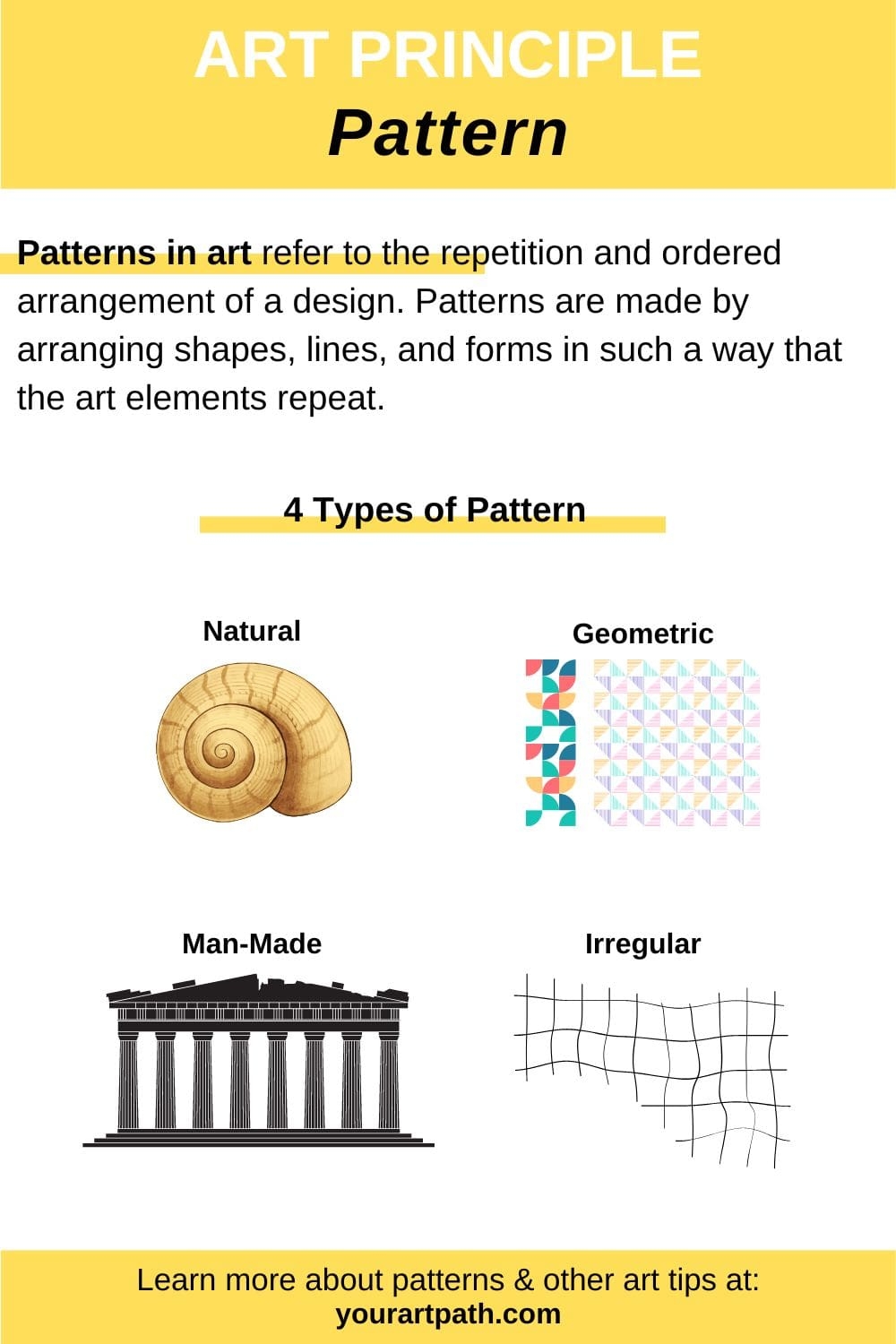
What Is Pattern Principle In Art 4 Types Examples Definition YourArtPath
